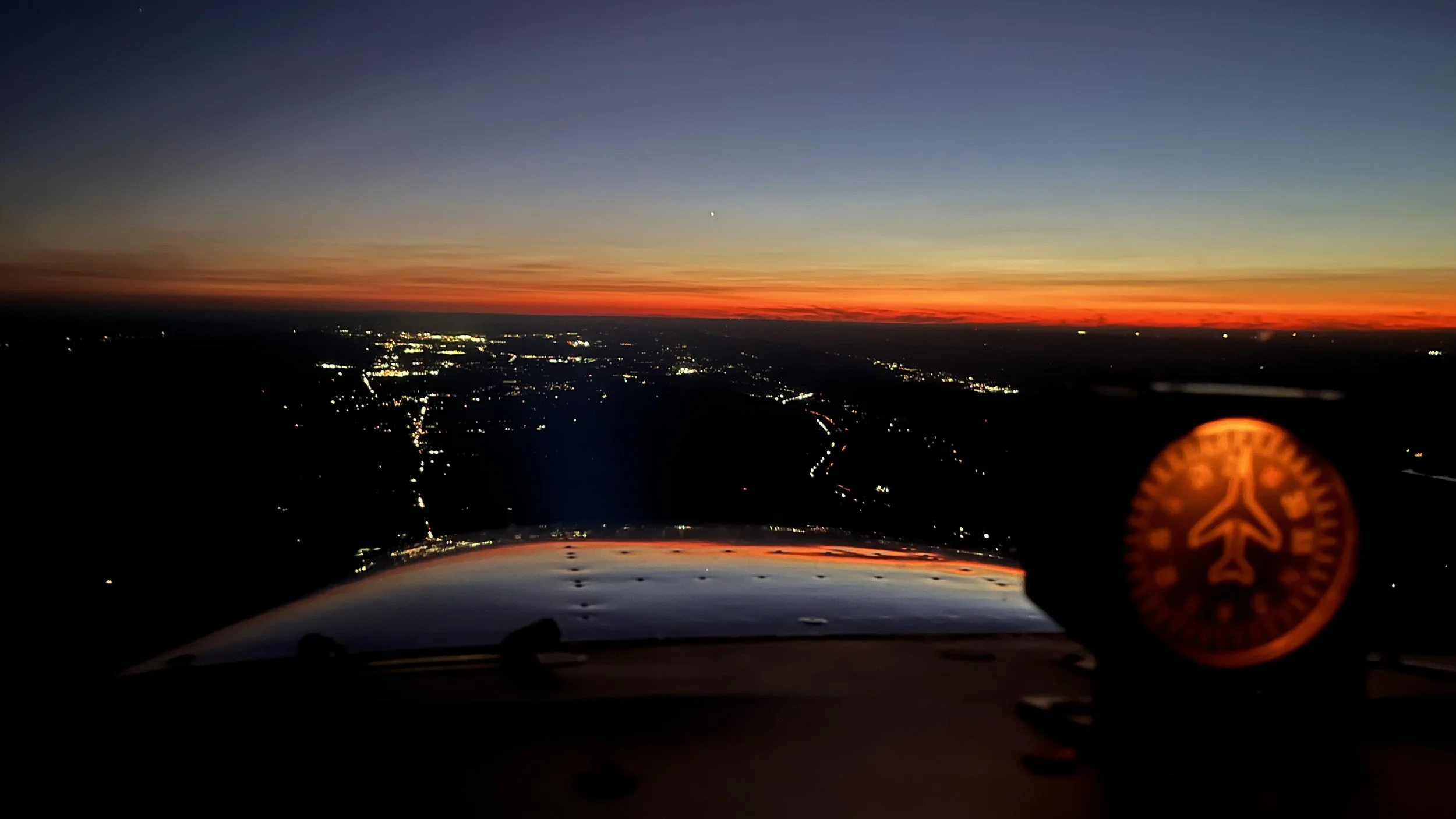
Flying at night can deliver calm air and beautiful views, but may bring additional challenges as well. Here are five tips to make your night flying safer, more comfortable, and more fun.
1. Improve aircraft familiarity
It’s easy to find the carb heat or fuel selector during the day, but can you find it in the dark without a flashlight? Fumbling for switches or controls creates a distraction and reduces situational awareness. Spend focused time learning the operation of your aircraft during the day (or in a lighted hangar) before flying it at night.
2. Know the clouds and the moon
Flying on a clear, moonlit night is a vastly different experience from taking off under a solid low overcast. Inadvertent flight into clouds is much more difficult to avoid in the dark, and it is common to encounter situations at night that are technically VFR but offer little more visual reference than IMC. Check the weather (and moon) forecast carefully, and know what you are getting into.
3. The right lights for your mission
A small flashlight with a red lens is great for the cockpit, but will you need a brighter light for navigating the deserted parking lot at your destination, or a hands-free option like a headlamp for fueling a high-wing aircraft in the dark while balancing on a ladder? I like a small clip-on light for in-plane tasks, but I always pack a brighter light in my flight bag, and I’ve been glad to have it many times.
4. Reconsider the stop-and-go
Pilots in a hurry to accomplish the three takeoffs and landings to a full-stop for night currency may be tempted to make stop-and-go landings in the name of time efficiency. Before attempting this, remember that it can be harder to judge remaining runway distance at night, and the darkness can impact your perception in other ways that reduce your safety margins. Calculate your required distances carefully, and consider a taxi-back instead.
5. Don’t go it alone.
There are so many good reasons to bring a CFI along with you for a night flight. Has it been a while since you’ve flown in the dark? Are you less than 100% familiar with the aircraft? Is there any question about the weather? Are you flying into an airport that may have invisible obstacles? If you answered yes to any of these questions (or if you still have any doubt), then bring along a CFI.
Final thoughts…
Flying at night can deliver some of the smoothest air and greatest views around, but make sure to be aware of the additional risks, and talk to a local CFI for more ways to mitigate them.
