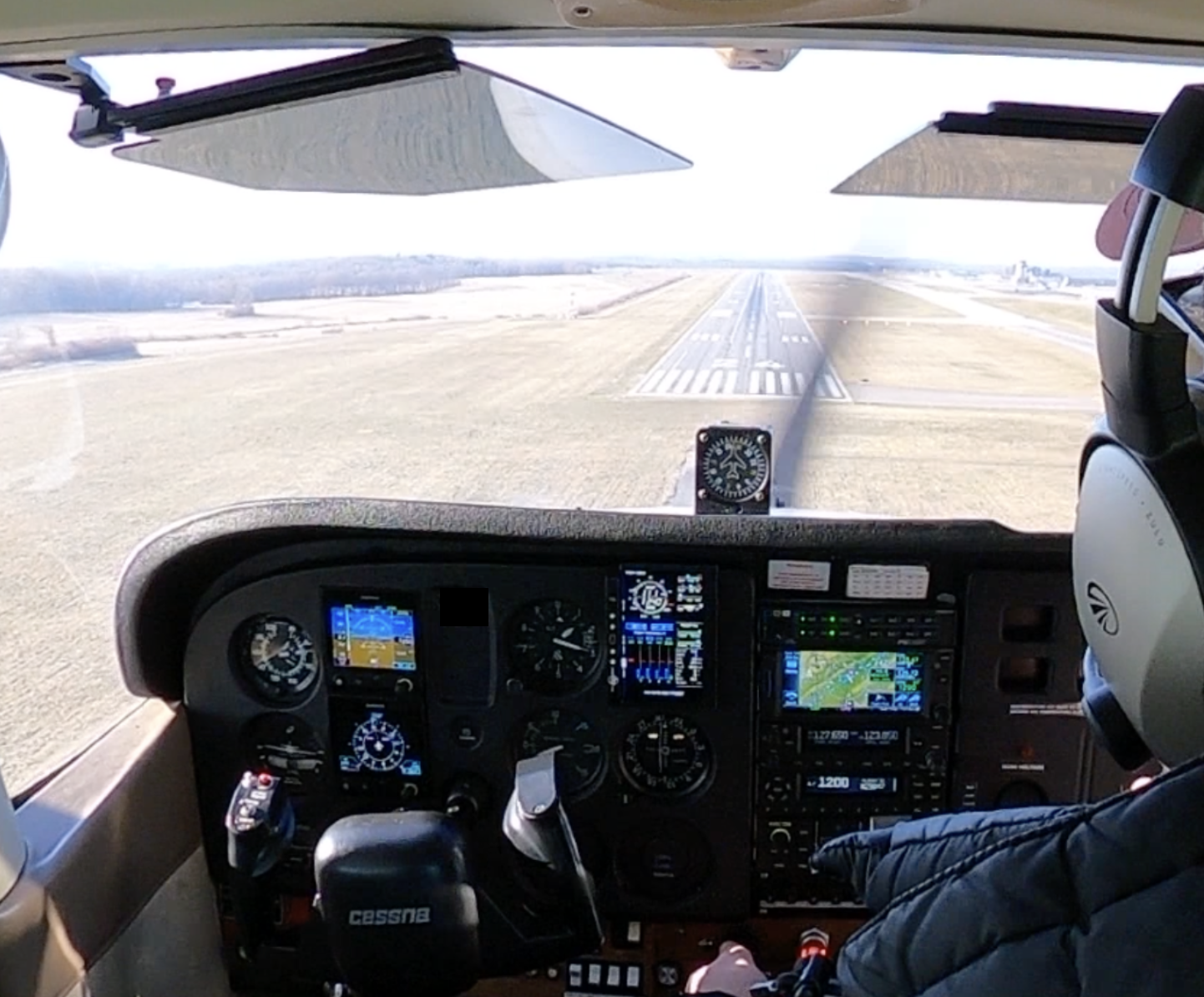
Your self-talk during final approach can make a difference to the quality of your approach and landing. Our brains have a tendency to ignore the “don’t” in commands that we give ourselves (and others) – so your internal pleading of “C’mon - don’t bounce this one!” or “Don’t screw it up!” is likely to make your landing worse.
I use a check-and-confirmation of “On airspeed, On glidepath, On centerline.”
If any of these aren’t true, use specific language describing what is wrong and how you will fix it. Some examples are:
“Left of centerline - correcting”
“5 knots fast - pitching for 65”
“Above glidepath - reducing throttle”
For many pilots, it is helpful (and often required by company Standard Operating Procedures) to take this a step further and actually make certain statements aloud. This is also beneficial in a checkride situation — where the Designated Pilot Examiner (DPE) is likely to give more leniency if the applicant shows that they quickly recognize any deviation and are making appropriate corrections.
